Situation
Changing consumer needs, such as the rise of organic food, and rapid brand and category expansion to meet those needs, left Target’s seven food owned brands with overlapping positioning, similar products, and ineffective messaging to consumers.
Insights
Understanding what the consumer wanted from owned brands was important to success. After extensive consumer research my team learned consumers knew our brands were associated with Target, but didn’t understand what the brands stood for (providing a lot of latitude to make changes without disruption). Since owned brands have gained relevance over the past thirty years, and the consumer understands their value, the new positioning could move away from the idea that the brand needed to express a spectrum of value.
Every demographic was interested in making healthy food decisions, but everyone defined wellness differently. Consumers were hungry for information about where their food came from and the health standards the brands represented. No one in the research reacted well to “this is the good for you brand,” or “this is the bad for your brand,” but they were very comfortable learning how that brand fit into their healthy lifestyle, or how the brand was an “indulgence.”
Challenge
Reposition and align Target’s owned brand food brands to create a consistent message to consumers, grow sales, and remain relevant.
Role
I initiated and led a cross functional team of marketing, guest insight, merchant, and pricing partners that conducted the brand research, portfolio branding, and roll out execution.
Action
The team evaluated all seven brands and 3000+ skus to create a new system of aligning the brands to their specific audiences. We could use a new spectrum to stratify our brands.
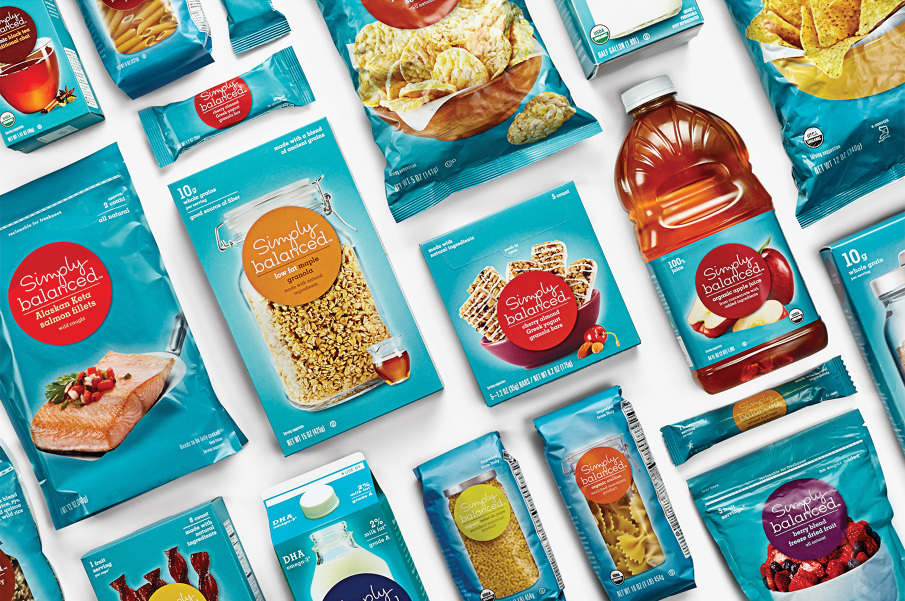
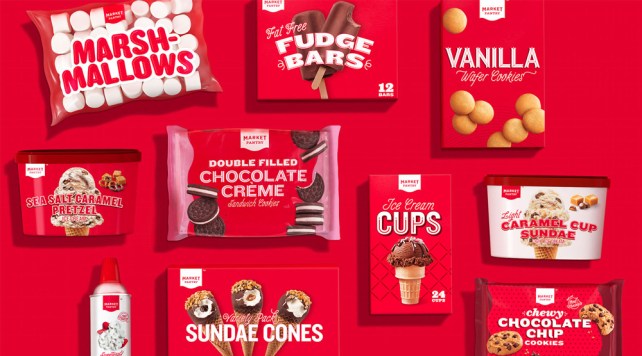
Based on consumer insights, a wellness spectrum was chosen to organize the food brands. Each brand expressed a level of wellness. Organic was on one end (Simply Balanced), and Twinkies on the other (Market Pantry) with various brands in between. We weren’t preaching wellness, we didn’t say “Twinkies are bad,” or “stop buying Twinkies.” Instead, the brands helped consumers make choices based on what wellness meant to them, with the most information we could provide. Our portfolio was designed to facilitate the consumer’s journey toward healthy eating.
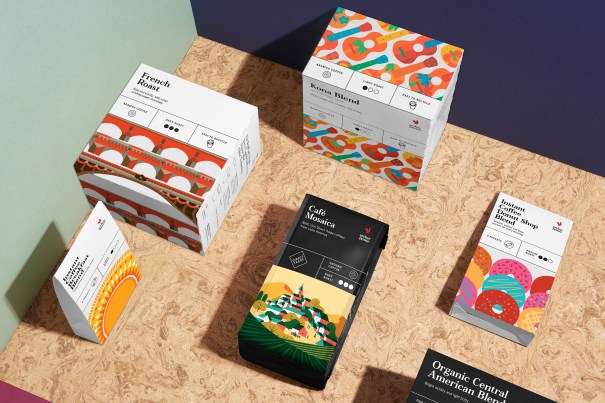
To make the system work, some brands needed to be sunset, others amplified, and new brands created. At the end of the project we had narrowed the number of brands from seven to five.
Finally, the customer had to be told about the change, which required a new language to talk about the brands. We utilized digital advertising, social media, social influences, and e-mail to funnel traffic toward our brand websites to increase awareness, then utilized the websites to drive traffic to the stores through announcements of in-store sampling and coupons to complete the sales. Each channel was focused on showing the consumer how Target food products could help them on their wellness journey.
Result
This multi-year process grew owned brand food sales 4% above plan the year after it was completed and increased brand awareness and brand association based on consumer surveys.
 Theodore Schweitz